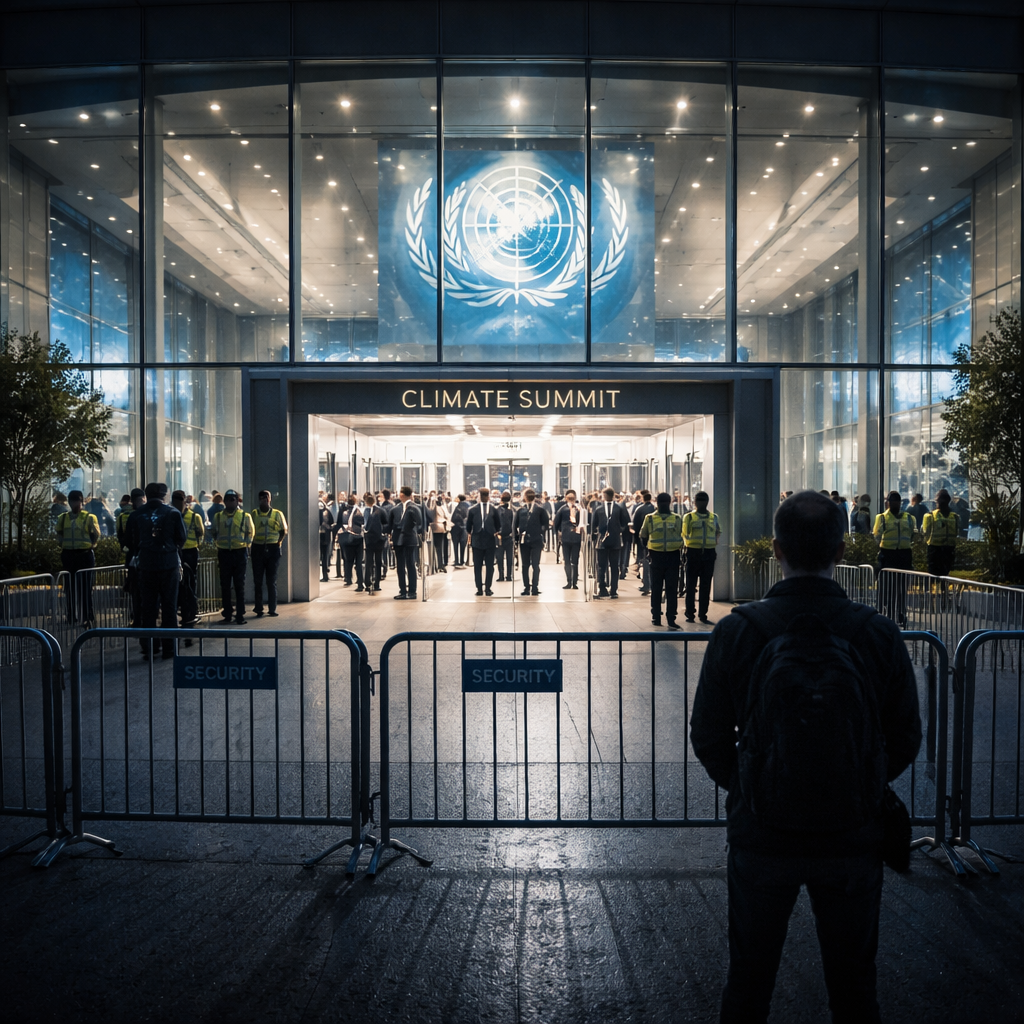

Most people hear about global climate conferences only through headlines, press releases, or carefully framed media narratives. What they rarely see is what happens inside these events, who is allowed to speak, and how decisions made there ripple outward into everyday life.
This episode of Connecting the Dots offers a first-hand look inside the world’s largest climate conference through the experiences of those who were actually there. Rather than debating abstract climate models, the discussion focuses on power, process, and consequence. How global climate governance operates in practice and what it means for sovereignty, agriculture, energy, housing, and political accountability. This is not theory. It is observation.
Connecting the Dots Audio
Guest: Debbie Bacculuppi is a Northern California cattle rancher and agricultural advocate with hands-on experience in land stewardship, water rights, and food production. She operates a family ranch producing non-GMO, farm-to-table beef.
Guest: Andrew Muller is an investigative journalist and researcher who writes for The New American magazine. His reporting focuses on global governance, international institutions, and media access.
The New American: https://thenewamerican.com/
Connecting the Dots Video
What Happens Inside Global Climate Conferences
The guests describe climate conferences not as open scientific forums, but as highly controlled political environments. Tens of thousands of attendees may be present, yet only a very small number of journalists are allowed to question the prevailing narrative.
Accredited media overwhelmingly supports official positions. Independent reporters face monitoring, marginalization, or exclusion altogether. Access requires navigating multiple layers of security and institutional approval, creating a system where dissent is managed rather than debated.
The result is a space where outcomes appear predetermined, and disagreement is treated as disruption.
Agriculture, Land, and the Front Lines of Climate Policy
For farmers and ranchers, climate policy is not theoretical. It directly affects water access, land use, livestock viability, and long-term ownership. Regulations framed as environmental protection can quickly become mechanisms for restricting how land is used—or whether it can remain privately held at all.
The episode highlights how rural producers experience the effects of climate policy long before urban populations feel the consequences. When land use is restricted, water access is regulated, and compliance costs rise, food systems become more centralized and less resilient.
These pressures are not accidental side effects. They are structural outcomes.
Energy Policy and Economic Pressure
Another major theme is the contradiction between climate rhetoric and energy reality. Nations that promote aggressive “green energy” mandates often expand energy-intensive infrastructure at the same time. Wind and solar projects are placed on prime agricultural land, while regions most compliant with climate mandates experience the highest energy costs.
The guests frame this not as environmental necessity, but as deliberate economic pressure—reshaping behavior through affordability, dependency, and access.
When energy becomes unreliable or unaffordable, independence shrinks.
Political Messaging and Cultural Signals
The episode also explores the role of symbolism inside climate institutions. Political messaging is not subtle. Cultural signals embedded in art, displays, and public installations convey approved viewpoints, particularly toward national sovereignty and political leadership.
These messages are not fringe expressions. Their presence within secured conference environments suggests institutional acceptance and alignment. Political hostility is normalized rather than hidden.
The Accountability Gap
A recurring frustration discussed in the episode is the growing gap between voters and outcomes. Many citizens expect transparency, accountability, and consequences for institutional failure. Instead, global climate governance continues regardless of election results or public opposition.
National leaders often avoid directly confronting international bodies, while citizens are told to “trust the process” even as their leverage diminishes. Decision-making shifts upward, further away from voters and local communities.
Housing, Stability, and Social Consequences
Climate policy is also tied to housing affordability, delayed family formation, and increased dependency on centralized systems. Rising costs and regulatory complexity make ownership less attainable, weakening long-term stability.
When people cannot plan, build, or invest in their future, civic engagement declines. Economic instability becomes a form of social control.
Who Really Governs Climate Policy?
Throughout the episode, global institutions are identified as the coordinating force behind climate policy. These bodies operate without direct accountability to voters, shaping domestic outcomes through treaties, pressure, and compliance mechanisms rather than legislation.
This creates a jurisdictional bypass—policy without consent.
What This Episode Is Really About
At its core, this discussion argues that climate change is not the end goal. It is the mechanism.
The world’s largest climate conferences function as policy factories, narrative enforcement zones, and testing grounds for global governance. Agriculture, energy, housing, and sovereignty are reshaped under the banner of urgency, with little public input.
Why This Matters
This episode matters because it documents first-hand attendance rather than speculation. It connects abstract global policy to real human impact. It shows how dissent is managed instead of debated, and how decisions made far from voters still shape everyday life.
This is not a story about personalities. It is a story about structure.
Final Takeaway
Seen through the transcript, the world’s largest climate conference is not simply an environmental gathering. It operates as a command center for technocratic governance, where policy precedes consent, compliance replaces debate, and sovereignty becomes optional.
Understanding that shift is the first step toward recognizing what is actually being built—and who is expected to live with the consequences.